On the Connected Minds website, the word “co-creation” is seemingly everywhere. Connected Minds gives you a clear starting point for understanding co-creation, including a definition: a collaborative approach to research wherein researchers work directly with the people, communities, and sectors affected by an issue to jointly define problems, design and test ideas, and evaluate outcomes. The website also includes a step-by-step guide, developed from an extensive literature review that walks researchers through i) understanding the foundations of co-creation, ii) a practical how-to guide to implement it, and iii) worksheets to support real-time collaboration, decision-making, and evaluation.
On paper, co-creation is important, and it doesn’t take a genius to understand why. Collaboration pushes research forward. Diverse voices and perspectives broaden how problems are framed, and consulting with end-users can only make our solutions better. So yes, co-creation sounds great. But in practice, is it worth the extra time, discomfort, and the added coordination in a research world that rewards speed, efficiency, and productivity?
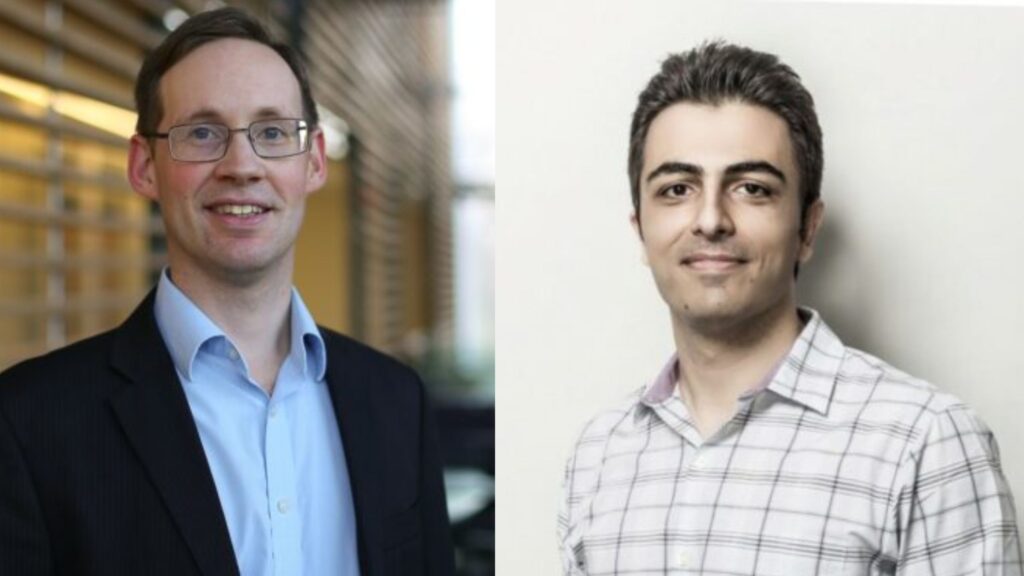
If you are like me, it isn’t enough to just read about the definition of co-creation or skim a how-to guide. You also need real-life proof of why it is worth going the extra mile to reach out to community members, researchers in other disciplines, and experts from all over. To understand why co-creation is so important, I spoke to two Queen’s researchers, Dr. Claire Davies and Dr. Gavin Winston. Both have made co-creation a foundational part of how they do research.
Starting with people changes the problem
Dr. Claire Davies, Professor in Mechanical and Materials Engineering, spoke to me about a time she brought students who were developing robotic sensors and exoskeletons for stroke rehabilitation. As she recalls, after her students had met the patients, ‘they walked out of the clinic at the end and said, “those people don’t operate anywhere near what they do on YouTube. I am going to have to redesign my sensors.”’
Dr. Gavin Winston, Professor in the Department of Medicine, echoes a similar sentiment from a clinical perspective. He reflects on early co-creation workshops with people living with epilepsy, he notes that “one of the overwhelming things was that people really liked the concept and felt that it would be useful.” In both cases, talking to end users shaped how the technology is built, but more importantly, it reshapes how researchers perceive problems.
And this is where a major problem emerges: do we, as researchers, actually understand the problem at hand? We read the papers, do literature reviews, and make assumptions, but do we slow down enough to actually listen?
Co-creation slows research down, but that’s the point
Research is built on fast-paced outputs and productivity. It’s a race against time for the next grant, the next position, and the next project. Co-creation interrupts that process and slows it down.
Dr. Davies was recently awarded a Team Grant for her project, When People Talk, Listen Completely, which focuses on developing AI-driven communication technologies, educational tools, and workplace strategies to improve employment access for Canadians with speech impairments. Across her work, she has noticed repeatedly that, “ninety percent of engineering is designing, and people neglect to actually talk to clients [during] the design process.”
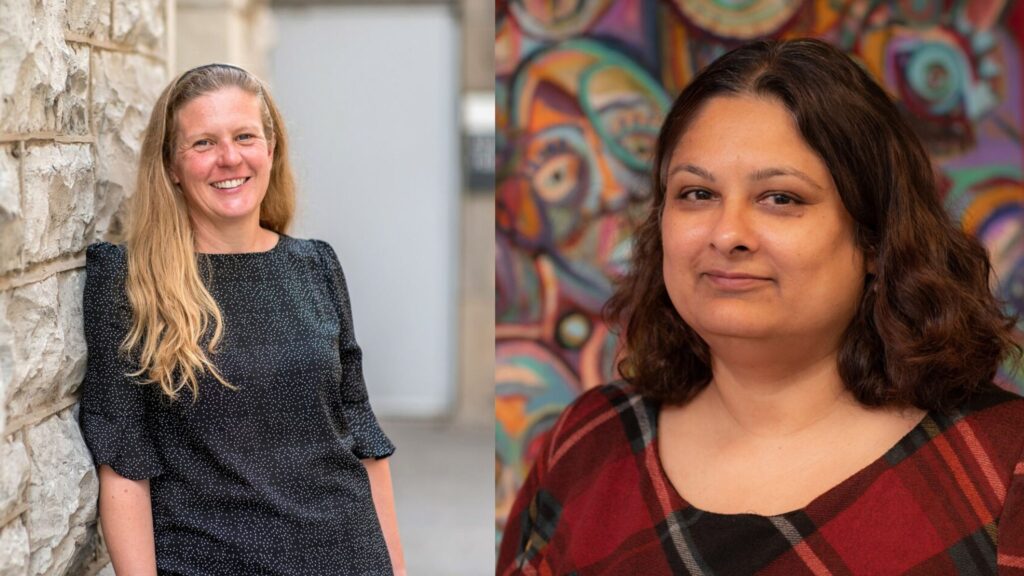
Through Connected Minds funded co-creation workshops with people who have speech impairments, Dr. Davies and her team learned how varied communication can be for this group of people. For instance, some participants relied entirely on speech-generating devices, others used vocal utterances which required time and familiarity to understand, and some participants needed interpreters.
Sometimes, there were long gaps while participants typed out their answers. At first, she thought these pauses would be labelled as inefficient since they resulted in delayed responses. However, she realized that it was important to deliberately leave them in. As she recalled, “Initially I thought, well let’s take out all those huge gaps where people are typing their answers. But then I realized that was the most important thing for people to learn, that you have to sit there and you have to wait and you have to listen and you don’t interrupt… you just have to be quiet and patient.”
Ultimately, it became about letting people communicate at their own time, pace, and comfort level. The approach she and her team took forced researchers to slow down, wait, and listen completely. These workshops were then thematically analyzed and brought back to participants for validation, directly informing her grant application and future research themes. For Dr. Davies, there is a clear takeaway: “the biggest thing is going in with no preconceived conceptions of what you think needs it, [so having] no preconceived ideas of what you’re expecting out of it.” Involve people in the beginning and throughout the research process, not just at the end.
Consultation with end-users expands the research problem
Dr. Winston has a similar experience. He was also awarded a Team Grant for his project, Wearable EEG for Personalized Epilepsy Management, which focuses on developing a smart, wearable electroencephalogram (EEG) device designed for clinical accuracy, long-term comfort, and ethical use in everyday environments. His team aims to bridge the gap between short, clinic EEG recordings and long hospital stays by developing a wearable EEG device that provides clinical-quality data, long battery life, and full electrode coverage that can be used independently at home. At first, the research problem may sound like a technical challenge, but it becomes something much bigger.
Involving people in the research process immediately expands the scope of the problem being addressed beyond medicine or engineering alone. Once an EEG wearable is introduced into the home, questions of ethics, legality, accessibility, privacy, and caregiver impact become as important as the hardware of the device. Thus, it becomes clear that what works in a controlled hospital environment doesn’t always work into someone’s daily routine.
Addressing these questions requires an interdisciplinary team that brings together clinicians, engineers, ethicists, lawyers, community organizations, patients, and caregivers. Dr. Winston and his team heard directly from participants who would eventually use the technology. For instance, “things such as comfort were brought up as being critical if [the device] was going to be used.” Beyond comfort, participants also discussed usability and support: “They felt there would need to be clear availability of technical support… or at least training so they know how to use such a device.”
As Dr. Winston points out, “there’s another large part of the project which looks at all the ethical and legal implications of such a device… if we’re recording data in a home environment, what are the security implications of that?” Once people are involved, the problem is no longer about engineering a better device. It’s also about understanding the context in which it will be used. Starting with people means that no single discipline can fully understand the problem on its own.
Conclusion
For me, the value of co-creation has become clear, not because it sounds good on a website, but because of what it forces researchers to think about. Starting with people changes what we think the problem is, slows us down in ways that enhance our solutions, and makes it impossible to work by ourselves.